The World and I

Does the world exist around us or do we exist in it?
I think the answer to this question reveals a lot about a persons thought process.

Most people will obviously ask what is the difference between the two views. What is the choice that we are being given in the question?

The fundamental difference in the choices is the net flow of influence. Do you end up influencing the world around you or are you influenced by it?
For most people there is no net flow because situations where the world dictates you are balanced by situations where you dictate the world.

In fact if there is no net flow then you are doing well in life according to me.

Why not us?

Netherlands from air looks like an island. Instead of roads in between fields they have canals. The entire country is built on water.
UK is famous for its BAD weather. It is cold and damp.

Both countries today are counted amongst the worlds most developed countries.
People will point to their colonial past as the source of their wealth. But these countries did not always have these colonies. The colonies were built up with strength and resolve. It is not easy to conquer and command people halfway around the world.

These countries had similar problems as India. Problems related to oppression of poor, caste system, superstition, domination of religion and wars.

As time passed the fate of these countries diverged from that of India. We became the shoe on their foot. The diamond in their crown.

What could be the reason?
Maybe it was the lack of a global point of view?
Maybe it was something to do with looking for short term riches over the long term benefit of the people.
Maybe dictatorship and rule of kings went on for a decade longer than it was supposed to?

Maybe the politicians and industrial elite took over from the rulers of old to exploit people? But the same happened to Germany that to not once but twice.

What could it be then?
Could it then be the inability of India to control its population growth? It could certainly be a major factor. Bigger the car more powerful an engine it needs. Furthermore more passengers on board lesser is the efficiency of the engine.

Where to go from here?
Start a one child policy like China?
Or better educate people so that they understand the advantages of a small popultation?

Evidence from Kerala indicates the second option is just as good (if not better) than the first. Kerala’s population growth stands around 1.8 which is similar to that of China but a whole lot less than the National average for India.
Kerala also boasts of 99% literacy.

This means education has a clear link with population growth which in turn has a major effect on economic and civic growth of the country.

If the equation is so simple again I ask… Why not us?

The Three Laws of Thermodynamics

First Law:

The total amount of matter and energy is conserved. Even though matter might turn to energy and visa-versa the total amount is always conserved.

> Money/Wealth etc. (matter) and Effort (energy) can convert into each other. But the total amount of it remains the same. So someone expends a lot of energy to get little matter so that others can get a lot of matter by expending little energy!

Second Law:

The total amount of entropy (chaos or disorder) in the universe always increases. In other words everything must eventually age and run down. For example burning paper produces smoke which means a net increase in entropy takes place. But we never see smoke re-assembling itself into a piece of paper.

> The world is going to descend into chaos no matter what we do. So why give a damn worrying about it. Why spend energy organising things around us. Why fight chaos?

Third Law:

No refrigerator can reduce temperature to absolute zero (−273.15 °C, the lowest possible temperature).

> Absolute zero means perfection. It means at absolute zero there is no chaos there is no randomness because it is the lowest possible energy state (of zero energy). There is perfection. But we can never reach perfection as we can never reach the lowest energy state. Therefore perfection is not achievable.

How to get updated data using AJAX

A common use of AJAX is to get some data from a database and then display it on a web-page.

Also a common issue with AJAX calls is that it intercepts the request for data and tries to handle it locally. If it can’t only then is the request forwarded to the server. This is done to improve the performance of the web-page.

But this can have a serious side effect where after the first call to the server for data, subsequent requests are handled locally even though the data on the server side may have changed.

This is, most often, caused by a standard request string being used again and again.

For example if you want to fetch data from table ‘employee’ to display a list of employees then your request string (for HTTP GET) might look something like:

awebpage.jsp?table=employee&action=list

After getting the initial list of employees if any changes are made in the database they will not be reflected on the webpage even if you click the refresh button on the browser. The only way you will be able to see the ‘fresh’ data is if you reopen the page in a new browser window.

This is because every time the data listing request is sent using AJAX the XMLHttpRequest is intercepted by the browser, the request string checked and if found the same the request is responded to at the client side itself using cached data. Thus the ‘fresh’ data is never obtained from the server because it never gets the request for ‘data’.

How to solve this?

It is very simple to solve this problem. Just add a parameter with changing values to the string. For example:

awebpage.jsp?table=employee&action=list&rndparameter=10

Here the ‘rndmparameter’ parameter will have a random number assigned to it every time the request is made. This will make the request string different every time. Thus the request will be forwarded to the server and not be handled locally.

The  parameter can have any name and any changing value. It need not even be random value. You could toggle a boolean variable ‘true’ and ‘false’ between subsequent requests.

Work, Love, Skills and Earth

Sigmund Freud, the famous psycho-analyst, proposed that work and love give stability and meaning to our minds. I read an interesting extension to this in Parallel Worlds by Michio Kaku.

Work because it helps give us a ‘sense of responsibility and purpose, a concrete focus on our labours and dreams’ (from Parallel Worlds by Michio Kaku).

Love because it puts us within ‘the fabric of society’ and ‘gives us roots’. Without it we become ‘drifters in our own land, unattached to the concerns of others’ (from Parallel Worlds by Michio Kaku).

Michio Kaku proposes two other things that can give ‘stability and meaning’ to our minds.

Developing our skills for the benefit of society in general. To achieve our maximum potential. Everyone has problems but we all have certain skills which can be developed to overcome those problems.

Improve the world around us, do something for the benefit of mankind in general. Clean up our neighbourhood, help someone in need or just be kind to someone.

The Hands of Man

Today someone shared quite a remarkable thought with me so I thought I would share it with the world!

A new born baby has a clenched fist. The tightly closed fist represents the hunger for life. It represents the desire to grab the most out of this chance to be alive.

But when a person dies their hands always end up in an open and relaxed position. This highlights the fact that we cannot take ANYTHING with us. There comes a time to let go of all the things material.

A Day at the Registrar’s Office

One would think a Registrar’s Office where probably crores worth of property changes hands every day life is pretty dull and weighed down under thick dusty files. But no! Any place where big things happen (like people buying their first house or probably registering their last will) can be anything but dull. In fact it is full of stories!

One would wonder why is the place not clean and how come people who can spend lakhs to buy a property do not have civic sense to use a dustbin. Why don’t the civic authorities have common sense to put dustbins in a place visited by hundred of people a day!

There was a large group of young Army jawans there to register their wills. People who don’t have control over their destiny. I wonder how it must feel to write out your will knowing that it might be used soon.

There were photographs I took, some sad, some funny and some fascinating.  There was life in all its glory. Intersection of different life-flows. All in all it was a very interesting day out at the crossroads of life.

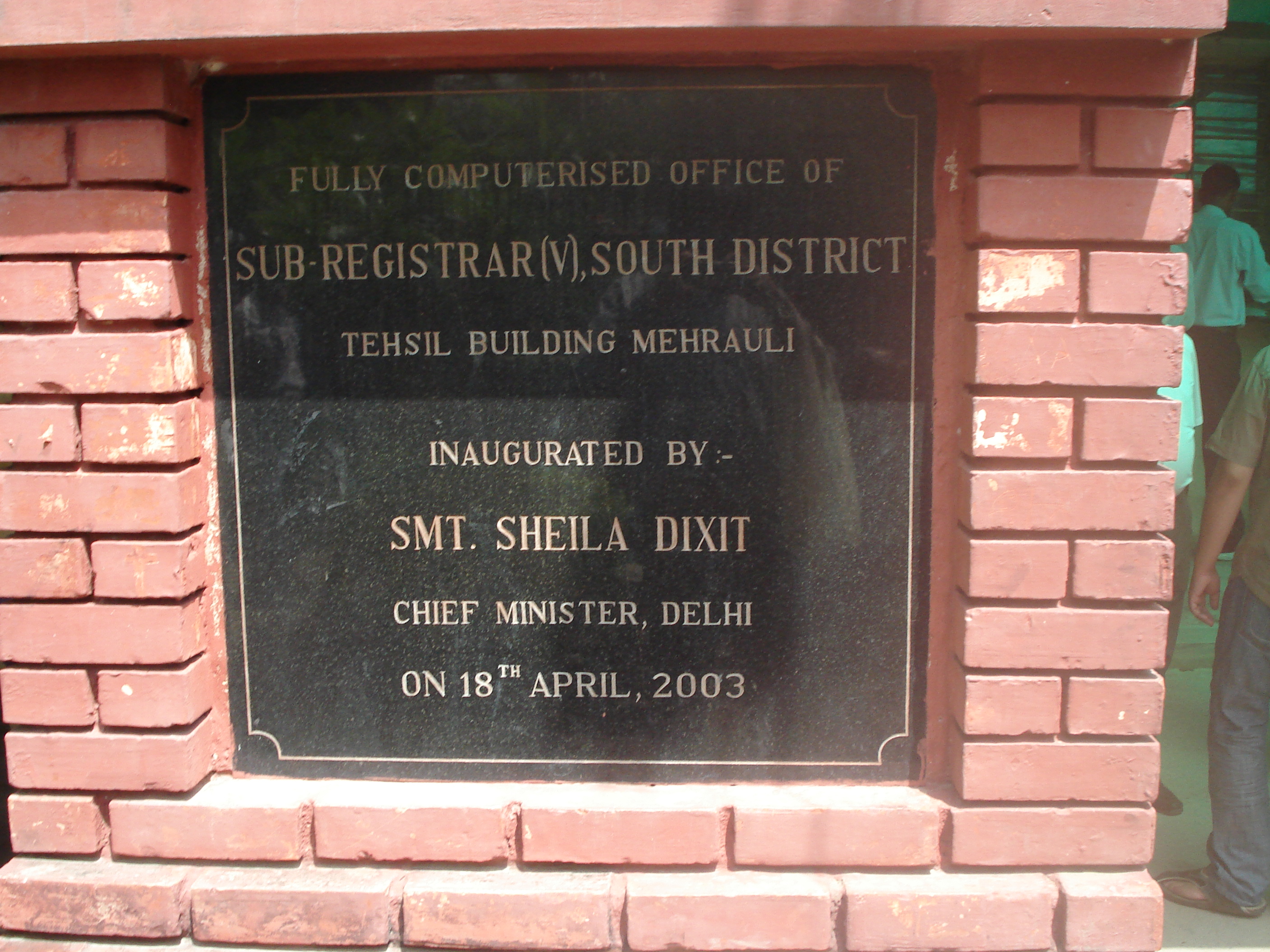
Stone slab announcing the installation of computers at the govt. office!

Heaps of Garbage..
Heaps of Garbage..


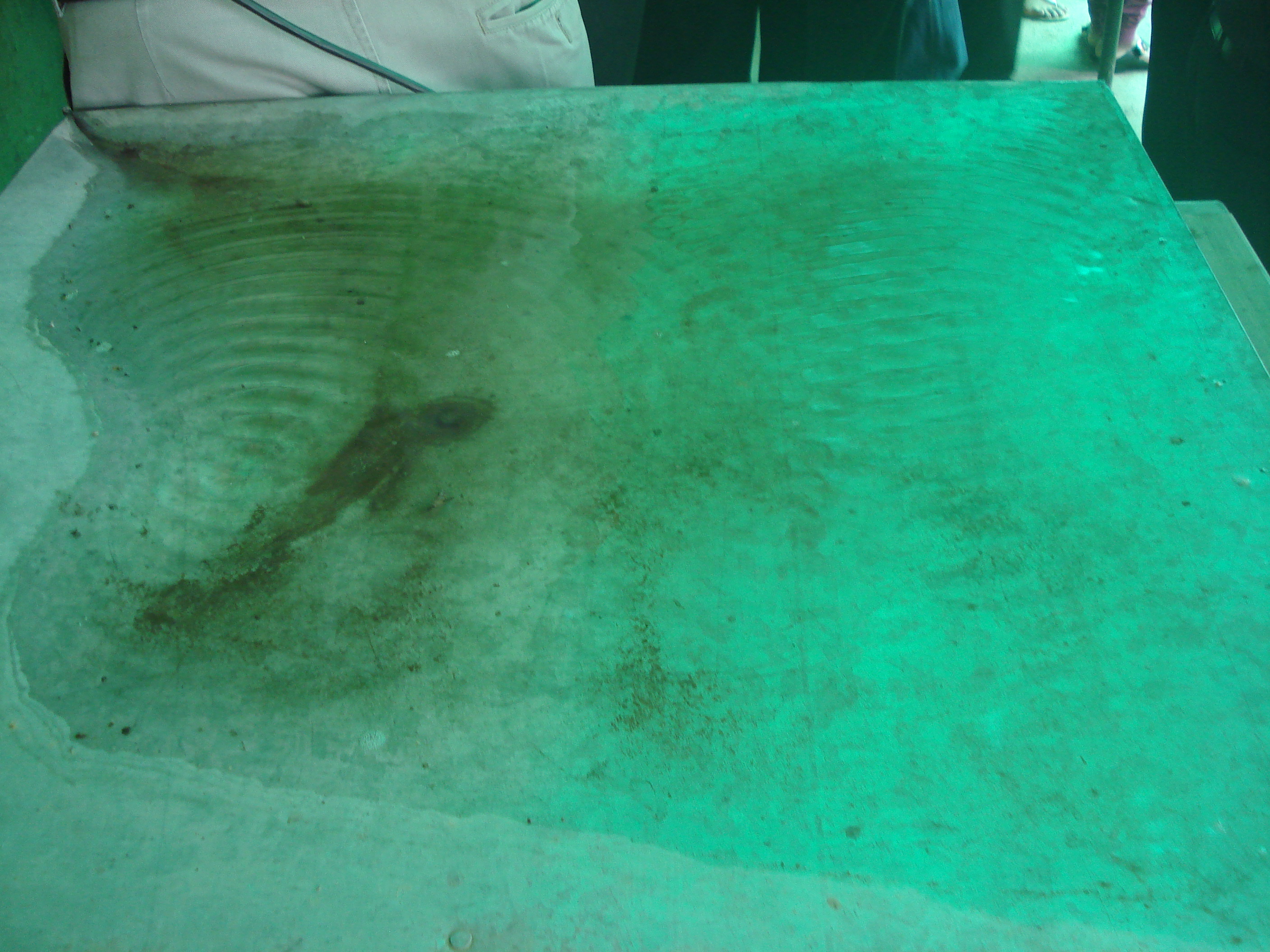
Patterns on water..
Patterns on water..

🙂

Man is not God… God is not man…

‘Man is not God’ is a phrase that is often used when ‘science’ tries to encroach upon what is believed to be the realm of ‘God’ (e.g. cloning and stem cell research).

Obviously the term ‘man’ is loosely used and I use it here in the wider context to represent both men and women.

I also heard this phrase in a movie the other day. But all of a sudden my brain turned this line around and presented it to me. It gave me quite a lot to think about. Here is the phrase turned around:

‘God is not man’

Man needs science because man is not God. God is not man therefore God has no need for science. God does not die (we assume?), does not need food (again assume?) so why would God DO science? God is all knowing and all seeing. This surely makes ‘science’ a useless tool for God.

When people say that Man should not try and play God (for example when we fiddle around with DNA to create new life forms such as GM crops) my question is since God is not man how does he (or she) know about the problems of being a human?

Man needs science to improve his life. God has no need for science. So why stop the spread of science? Why ban stem-cell research which has the potential of helping millions of people suffering from problems like diabetes?

That is because man does not know how to use science for benefit of mankind in general. Science becomes either a gun to hold against someone or a pile of money.

This is a debate which has no end. God can aspire man to achieve great things. At the same time if we realise God is not man then our perception of ‘what is God’ will change and this debate will end. That is when we will realise ‘God’ is not a destination, it is a journey.

Indian Foreign Policy – Himesh Reshammiya Style

‘Jhalak dikhla jaa’ (show me a glimpse) is one of the most popular songs sung by Himesh Reshammiya.

These days India seems to be taking their foreign policy decisions based on the above song. Few days ago I saw a news item on NDTV which talked about how India was concerned that US was getting closer to Pakistan. The major reason for this was that over the last month or so the Indian Government had been busy with the General Elections. During that time Pakistan had been busy warming up to the new US administration.

When the Indian politicians suddenly woke up to this fact towards the end of the election process they appeared desperate to see a glimpse of US engagement and interest in India.

As one big drama ends the next one is about to begin, the Indian politicians are  singing ‘jhalak dikhlaa jaa’ for the new US President.

Thumbs-UP!

How important is the thumb to the ‘Thumb Generation’?

If you are wondering what the ‘Thumb Generation’ is – the answer is simple. We are the ‘Thumb Generation’! This term refers to the popularity of various electronic devices (like cellphones) which we operate using our thumbs. These devices have become an important part of our lives. Thus we are the ‘Thumb Generation’.

Obviously the thumb is VERY important (if not critical) to the ‘Thumb Generation’. How important it really is I discovered only recently.

Some time ago I managed to cut my thumb. The cut required a band-aid. This meant that the top half of my thumb was covered in a plastic band-aid for two-three days.

Now this is a fairly common thing to happen to anyone. But being a part of the ‘Thumb Generation’ it made things bit weird for me. Here is how:

 – Tried to use my touchscreen phone… the screen wouldn’t work because my thumb was covered by the band-aid!

– Tried to use the keypad on the mobile… thumb kept slipping because of the band-aid.

– Tried to play a video game but my thumb started hurting.

– I couldn’t even scratch my head!